
My Life with the Thrill Kill Cult
Author
Date Published
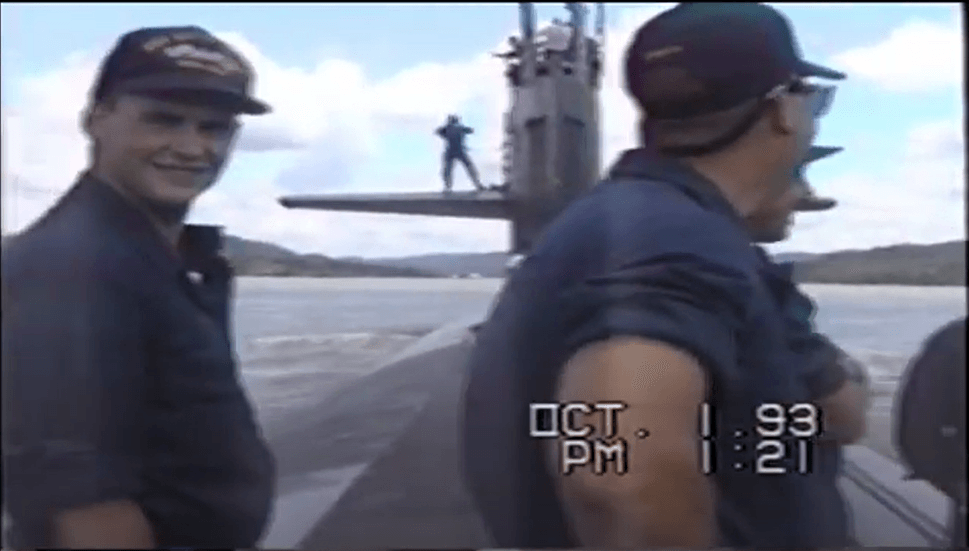
Chapter 24: Haze Gray and Underway
In October of 1992, I began my tenure aboard the USS Baton Rouge SSN 689, a journey that would last until my release from the Navy in October of 1994. Our vessel, laden with the scars of a recent collision with a Soviet submarine, set off from Norfolk, Virginia, to Mare Island Naval Shipyard on what would be its final voyage with a full crew. We cut through the waves at flank speed, unconcerned with the reactor core's lifespan, destined for decommissioning.
The USS Baton Rouge's service was marked by a harrowing incident highlighting the perils of submarine warfare. On February 11, 1992, amid a covert operation near Severomorsk, it collided with the Russian submarine K-276 Kostroma. Unseen by each other until the last moment, the submarines clashed in disputed waters, their passive sonar systems failing to provide warning. The Kostroma, surfacing unexpectedly, struck the Baton Rouge's aft, causing extensive damage to both—yet, by fortune, no lives were lost. This event, however, did claim an unseen victim: the crew's unity and effectiveness.
Following the incident, Commander JB Kolbeck took command, but the incident's shadow lingered, as the crew missed a pivotal opportunity for camaraderie during shore leave in Amsterdam.
The USS Baton Rouge's crew exhibited remarkable resilience and dedication, working relentlessly to repair the collision's damages with the K-276 Kostroma. Their efforts, often extending into additional shifts, reflected the strong spirit of the shipyard crew and sailors. Yet, the cancellation of shore leave in Amsterdam fueled a growing resentment, inadvertently increasing hazing incidents among the crew, altering traditions in the face of adversity.
Onboard, camaraderie and collective responsibilities were highlighted by "Cranking," where each enlisted sailor took a turn as a Food Service Attendant. The galley, dubbed the "Crawfish Inn" aboard the Baton Rouge, epitomized culinary excellence, buoyed by a substantial submarine service food budget. The array of options rivaled the best of Golden Corral—steak, lobster, French toast, all in unlimited quantities. Unsurprisingly, I packed on 50 pounds in less than a year, with most of that weight gain occurring during my four-month stint as a crank. Compounding this, exercise options were limited to a decrepit Stairmaster and a practically useless exercise bike.
This level of culinary quality extended to all aboard, as there were no separate officers' mess on a submarine—everyone ate from the same galley, even if they were coddled by having their food served in the Wardroom. The food service Chief, a former flag chef, brought a wealth of experience to the galley after serving an admiral and choosing to dive into life on a submarine. I fondly recall so many of the dishes we served, the indistinguishable from pizzeria quality pizza we made from scratch, the steak dinners, actual king crab legs and so many others. This was truly a manifestation of a promise which was not a lie.
The logistics of getting underway for extended missions involved all hands in bucket brigades, passing provisions along a human chain that stretched from the pier to the heart of the ship. The ingenuity of storage aboard the submarine ensured that every inch was utilized, with passages packed with supplies, challenging the crew to navigate the cramped spaces and requiring me to essentially duck walk through the narrow passages.
Also, during my operational year aboard the sub, it was pretty much standard practice that we would leave on Friday morning. If you were the transit duty section, you were aboard and mustering at 0330, for a reactor plant startup and heatup process which would culminate by roughly 0730. Compare and contrast this with the "Coners" the non-nuclear personnel aboard the ship, who's startup procedure consisted of flipping the "on" switch. There was a considerable amount of rivalry among the fore and aft divisions (engineering/not engineering) as well as between conventional machinist's mates (A Gangers and Nukes). There was no end to the inside jokes about coners and nukes - one I recall is that the coners have something and Nukes get the shaft.
I often recall my instructors in A School, Power School and Prototype always making the point that if you fail out now, you'll be "Haze Gray and underway chipping paint in no time" only to find out, when I graduated from Prototype, that indeed I too would be haze gray underway and chipping a lot of paint. And shining a lot of brightwork. I spent roughly three or four hours every day shining brightwork in the midships passageway every day as a crank - er, food service attendant.
During my time serving in the galley, I learned a new skill in the Trash Disposal Room, where the day's waste was compacted into "TDU tube turds"—sturdy packages of refuse destined for methodical disposal. It was a process that demanded both physical and mental stamina, emblematic of the submarine service's ethos of efficiency and teamwork. The TDU tubes were stamped steel sheets which were origami-like in that they would be bent around to form a tube, and the top and bottom flaps would be folded over. They had tabs which had to be bent to secure the whole thing together once completed.
I would spend 12 to 14 hours a day in the room, cramped so tightly because all of the trash from 140 or so sailors was deposited in the room after it was collected. Then, wading over the oozing bags of trash, I would assemble a new tube, drop a weight into the tube, place it into the compactor hydraulic unit, pull the lever, and admire the fermented ooze as it slowly extruded out through the holes of the tube, noting the putrid stench which inevitably coated my body and made me a pariah amongst my peers.
TDU day aboard the Baton Rouge was nothing short of an eventful escapade. Rising to periscope depth, we would engage in a peculiar form of ceremony: ejecting our meticulously crafted "TDU tube turds" into the deep. A coner chief would descend to oversee the operation, initiating a well-choreographed dance. We'd link up with control through sound-powered phones, then methodically load the TDU tube with eight or nine of these refuse torpedoes. The sequence of shooting trash was fascinating—a display of precision and coordination, with each "torpedo" dispatched into the ocean's embrace. It was a task that brought an odd sense of accomplishment, marking one of the few times the drudgery of trash duty turned into an underwater spectacle.
When I first arrived aboard, the Baton Rouge was scheduled for refueling in my second year. However, due to President Clinton's campaign promise to cut Defense Department costs and the recent accident involving the ship, our 688 class submarine (potentially the first) with at least 30 years of service life left post-refueling—was instead designated to become the first of its class to be decommissioned. There was a rumor going around on the boat that there was a hull ring with a plate on it indicating that the Baton Rouge was actually the original SSN 688, but because of delays in the shipyard, it was rechristened to the 689 and the Los Angelas became the 688 after this fiasco.
Service aboard the boat wasn't without its camaraderie. I had a number of close shipmates, including Andrew Jones, Kenneth Senn, and Louis Deleandro. One such memorable bonding happened in Roosevelt Roads, Puerto Rico. On a quiet weeknight shore leave, Petty Officer First Class Steven Denoia, the head of the Electrician's division, three other shipmates, and I found ourselves at the only open bar off-base, and we were the only patrons. Our tranquil evening was interrupted when five Marines, noting the absence of any other company, decided to engage in what Marines do best, that is if they can't get laid, they can definitely get into a fight. Despite my size—6'1" and 230 pounds at the time, and the largest of our group—the Marines, towering over our combined statures, were looking for trouble. However, Denoia, with the eloquence that would later aid his success in business, defused the tension, turning potential conflict into toasts and tales. It was a scene that epitomized the unexpected joys of service life—tense moments turned into cherished memories.
This turned out to be incredibly fortuitous. As the first to be decommissioned, we had no established procedures to follow, so part of our task was to create them. Consequently, the decommissioning process for our vessel, which for previous classes had been streamlined to about 3 to 4 months, laid the groundwork for what felt like an extended break at Mare Island Naval Shipyard.
Thus, when we were given our orders for decommissioning, this created a wonderful life opportunity for me. As an automobile owner and the recipient of a permanent change in duty station, I was given roughly $600.00 and the opportunity to drive my trusty Geo Storm GSI across the country, from Norfolk to Mare Island.
Let me take you back to my thrilling days in the Navy, stationed at Mare Island Naval Shipyard. It was a time of camaraderie, adventure, and some seriously questionable decisions (hey, we were young). I ran with a crew of unforgettable characters: Ken Senn, Andy Jones, and Lou Deleandro. Together, we were the "Thrill Kill Cult," exploring Napa Valley, touring Northern California, and generally causing a ruckus.
One of our most memorable escapades involved my trusty Geo Storm GSI. With all four of us crammed in, we were cruising toward the Golden Gate Bridge when I realized I didn't have the toll money. In a moment of pure genius (or insanity), I decided to back up on the on-ramp to avoid the toll. As luck would have it, we were pulled over by an officer who looked like he'd walked straight out of a "Reno 911" episode. He gave me a ticket, which I never paid (sorry, officer).
Our adventures didn't stop there. We racked up another ticket in Sacramento for an illegal U-turn. Looking back, I'm amazed we didn't get into more trouble. But those were the days, filled with youthful exuberance and a sense of invincibility.
Despite our occasional run-ins with the law, my time in the Navy was filled with incredible experiences. I made lifelong friends, explored beautiful landscapes, and learned valuable life lessons. It was a chapter of my life that I'll never forget, and I'm grateful for the memories I made with my "Thrill Kill Cult" crew. Remember, always pay your tolls (or at least try not to get caught backing up on the on-ramp).
During my entire time in Prototype in Ballston Spa, NY, and later during my tenure at Norfolk aboard the boat, one of my favorite activities was spending time with David Laime, whom I dearly loved and with whom I spent many nights at Rehoboth Beach, DE, and at RMA hanging out. Dave is unique—he is funny, charismatic, musically gifted, and undoubtedly the life of any party he is part of. During my '5-day' weekends in prototype, I'd hop in my trusty Geo Storm GSI and brave the five-hour drive from upstate NY to Northern VA, where a veritable party always awaited. As I've stated elsewhere in this journal, I could devote whole tomes to the wonderful life experiences I shared with so many others on my adventures with Dave.
At that time, he was involved with a band called the Naked Soul Brothers, comprised of several talented musicians in the area. Each weekend would involve giving his mom, Barbara, a big hug and catching up with her. Then, we'd adjourn to their finished basement, where we would make plans for the night's conquest. Then, invariably, there would be house parties with his extended high school friend groups, gigs playing in the local small band venues, and tons and tons of groupies. Here's the thing about if your best friend has girls falling off of him: He can only handle one or two at max. So yes, I was the 'scrub' hanging out the door, but I have no regrets and had an amazing time in the process.
On the first leg of the trip out west, I stopped by Dave's house in Northern VA for a brief fun-filled stay before hitting the road in the evening. I remember marking my time from Dulles Airport to Topeka, Kansas in a single session - 36 hours straight. This was with no illegal substances other than the OTC Ephedrine you could find in just about every privately-owned gas station and Vivarin tablets. During this drive, I was doing my best to beat Cannonball Run times.
While in Topeka, I did what only sailors would do. It was late, and I found a gentlemen's club where I proceeded to squander a hundred or so dollars on tips. I ended up being invited back to a hotel room I paid for with the dancer I had set my interest on, only to get there and she promptly fell asleep. Unrequited. It was probably for the best.
From there, I drove on to Boulder, Colorado, where Precious, a girl I dated when I visited with Dave in Northern VA was enrolled. Although I was never able to meet up with her, due primarily to the lack of sufficient telecommunications technologies like we have today, I explored Boulder and a shopping center which was so much exactly like my memories of Lake Forest Mall in Gaithersburg, MD. Although I never met up with Precious — yes, that was her name — I still have those fond memories of exploration and the hope of unrequited love.
From there, I hopped in the car and headed west. In Utah, I remember stopping on an on-ramp in the early morning hours to catch some much-needed rest and was awakened by one of the most glorious vistas I'd ever seen to that point. Just the big open space and the completely different palette of colors to what I was accustomed to growing up on the East Coast.
On the way, I had to stop at the Bonneville Salt Flats. I had read tons of books on all the land speed records of the Blue Flame and Budweiser Rocket car as a kid and had a fascination for the salt flats. There was a long access road out to the actual drive-off point for the dry lake bed, and I used this to see what my little Storm GSI could muster. At the beginning of the access road — on each side the expanse of the salt flat stretching out from me — I floored the accelerator for all it was worth. I ended up drag limited at 124 mph on the speedometer. I got to the end, realized the salt was a little wet and otherwise would mess up the car, turned around, and hit the road again.
Just before hitting California, I saw a sign for Lake Tahoe and felt a certain attraction and desire to see it. It was around 9:00 PM or so, I guess, on a Friday night. As I was driving along a two-lane road following signs to Tahoe—no GPS in those days, just a heavily marked-up Rand McNally Road Atlas—I noticed two attractive girls walking along the road. Being me, I stopped to ask if they could use a ride. To my surprise, the answer was yes. "We're heading to a bonfire," they told me, and directed me to a bustling bonfire with about a hundred locals milling around. The air was surprisingly dusty, and the clearing was on a hill, providing a moonlit view of the surrounding countryside.
When the bonfire broke up, they mentioned that there's no better place to get a meal than a casino in Reno. So, they directed me to Reno where we found a nice casino, and to my pleasant surprise—they weren't lying. I had a massive serving of tortellini alla fini with mushroom sauce for like $5.00, a bargain even then. I treated them, and it didn't break the bank. I dropped them off, then hit the trail again.
From there, I raced my way through central California and saw Vallejo for the first time, as well as my first Jack in the Box. I couldn't get over how low the humidity was—everywhere you went, it was always comfortable because your sweat would keep your body at the optimal temperature. I left the car in a massive World War II-era bunker on the shore of the island and flew back to Norfolk for the transit.
Also notable was that during my trip to California, the boat hosted a dependents' cruise which both my father and brother were invited on. They noted how the ship performed its "Angles and Dangles" exercises, wherein they perform an emergency blow and the ship rises at its maximum angle. This was hugely awesome for my family as they got to have a minor taste of what it was like to go to sea aboard a submarine and meet my fellow shipmates.
Upon arriving back, it was time to tie up loose ends. I said my goodbyes and packed the remainder of my belongings, which weren't much, and we made our way to Mare Island. Notably, on this cruise, we had substantial reactor life remaining. This translated to the fact that unlike normal submarine operations where the ship moves so slowly you can barely sense you are on a ship, to the rhythmic oscillations of the hull as it reverberated through the waters at flank speed, all the way.
Our passage through the Panama Canal led to an unanticipated week of liberty in Victoria, British Columbia. There, we immersed ourselves in the local culture, replete with its British influences and varied ales—a modest solace for the lost liberties of the previous year's events. Port calls served as the Navy's informal team-building sessions, and it was during these intervals that we strengthened our bonds through shared experiences.
As the Baton Rouge journeyed to its final destination, the camaraderie among the crew was a stark contrast to the relentless demands of shipboard duties. The drills, the long hours, and the perpetual state of readiness shaped not just a sailor's discipline but also a sailor's spirit. It was in this crucible of naval life that my story unfolded, a tapestry woven from the threads of duty, adventure, and the indelible bond between sailors.
In an interesting and fortuitous consequence of deactivating the boat versus refueling it, each system deactivated means one less maintenance item. One of the worst aspects of being a machinist's mate in the engineering division of a nuclear-powered submarine at that time was the abysmal inefficiency of the spare parts system. I remember one particularly galling instance when we were in Norfolk, and another submarine in our Submarine Squadron 8 needed a 10K distiller lower pressure brine pump. As it happened, this pump was identical to the auxiliary seawater pumps—the same manufacturer, model, mount, hookups, everything. They were identical but had different part numbers. Of course, the Navy way was to completely tag out the 10K distiller, then sequentially remove a maze of wiring and piping, methodically disassembling the entire unit until the low-pressure brine pump was accessible. Then, having successfully extracted the pump, we handed it to the ship about to get underway, waited for the part destined for them, and put it all back together again. This was one of the many ways in which the ship was able to consume 0730 to 1930 on non-duty days and 20 hours on duty days. I somehow think that in this day and age, the good men and women of our Navy have similar spare parts system debacle stories, but back then, it certainly was a real drag on my life.
Getting back to the narrative, as we deactivated systems, we increased our liberty—one system at a time. Eventually, our days consisted of mustering at 0830 and usually being off by 1130 after some cursory training or other tasks. Four-section duty meant every fourth night I spent the night on the barge with my duty section and manned Shutdown Rover Watch, walking the length of the ship looking for fires and anything out of the ordinary. I had a huge sense of pride during those times, knowing I was the sole human aboard a billion-dollar war machine, even if it was because the ship was defueled and inactive. I always felt such a huge sense of pride on the boat, whether looking up at its immense form from the dry dock or pulling into a Caribbean port and emerging from the ship, seeing the locals and what they must have thought about this futuristic war machine docking in their third-world port.
It was shortly after arriving at Mare Island that I met my future wife, Anita. During one of my many visits to the Horse and Cow, a legendary submarine bar in town, the place was a testament to the city's rich naval history, particularly its deep ties to the submarine community. This establishment wasn't just a bar; it was a veritable museum of maritime memorabilia, with every inch of its walls and even the ceiling adorned with countless mementos from the ships built or refurbished at the nearby Mare Island Naval Shipyard. For submariners and naval enthusiasts alike, it was a shrine; there were toilet seats, ship hats, belt buckles, and photographs—all echoing stories of the deep blue sea.
Among the relics, the roughly 40-foot-long submarine parade float that resided next to the dance floor was perhaps the most eye-catching, a proud nod to the undersea warriors of the Pacific. The bar's ambiance was a blend of the old and new, where contemporary beats mixed with country tunes, and the clatter of pool balls provided a rhythmic backdrop to the conversations that buzzed around the room.
The drinks came cheap, but the experiences were rich. It was the kind of place where a pretty older bartender caught your eye, and the charm was as potent as the spirits that flowed from the bottles. It was there, amid the laughter and the clinking glasses, that fate would have it—I met Anita, the woman who would become my wife, during a night out with my roommate, Bud Thompson.
The Horse and Cow was more than just a bar; it was a crucible of personal milestones. It was a place of revelry and realizations, where one too many drinks led to a humorous mix-up with a girl and her friend—a mix-up that spurred a significant life decision to abstain from drinking for many years. It's funny how life works; sometimes, the most profound changes stem from the simplest of errors, in the most unexpected places. The Horse and Cow wasn't just where I hung my hat; it was where I inadvertently shaped my future.
Before delving into the early days of my courtship with Anita, I want to share a momentous fight I had at the Horse and Cow. Shortly before leaving Mare Island, I frequented the Horse & Cow, primarily to ask Yoli, the pretty middle-aged bartender, out. In another of life’s missed opportunities, she agreed, but my imminent departure from the Navy soon added this to the many missed opportunities of my life. We all have a list of those, don’t we?
I was shooting pool, listening to music, and drinking tap ice water from behind the bar since I had given up alcohol some time earlier in the year for pretty much just this reason. Back when I was still drinking, I had dyed my hair black and lost a lot of weight, becoming nearly unrecognizable from the person I was upon arriving at Mare Island. At the bar, three sailors were playing pool next to me. One of them, somewhat derisively, asked if I had dyed my hair before and if I had lost a lot of weight. Flattered, I confirmed to the effect of, "Yeah, that's me. I used to have black hair, and yes, I've lost some weight, thanks." His response was accusatory: "You were hitting on my wife!" I wish I could adequately convey my expression at that moment—it reminded me of a scene from 'The Mask'.
He was accompanied by two shipmates, and I was alone. Unlike him, I had passing but real wax on wax off skills and wrestling experience from high school, and at about 175 pounds, I was in peak physical condition nearing the end of a year of championship fighter training. However, I hadn’t considered his shipmates. He approached me in the middle of the bar and repeated, "You were hitting on my wife!" I tried to defuse the situation, saying, "Hey buddy, it's all fun and games, no harm, no foul." What I should have said was that bringing his wife to a place like this was asking for trouble. Unfortunately, I didn't voice this thought. The confrontation escalated, and instead of throwing a punch, he tried to slap me with a pathetic, flailing punch. Foolishly, I grappled him to the floor, engaging in a wrestling and ground punching match. What I didn’t anticipate was his two shipmates joining in, kicking me as we flailed on the ground. I escaped with minimal injury, except for a particularly sore ankle.
The next morning, while showering in the empty dorm, I passed out from the pain —the first and last time I ever fainted from such discomfort. When I finally came to, I limped back to my room, went to medical and received a reprimand for the incident, which I should have kept quiet about, even though it was an assault by three sailors on one. Honestly, I don’t think there was a way to talk my way out of the situation, but I didn’t even consider it. Sometimes, you've just got to fight. This incident probably weighed on newly frocked Ken Whitson’s mind later when he decided to go nuclear on me for what any reasonable observer would consider a minor infraction.
As it happened, the story of meeting Anita is quite embarrassing, but tell it I must. One evening early in our stay at Mare Island, Bud and I spent many hours at the Horse and Cow. We both noticed Anita, who was there with an ordinary-looking townie. The thing about Anita at that time—she was elfin tiny, 4'11" to be exact, but other than that, a perfectly beautiful young woman, just distinctively tiny. I was too shy to approach, and Bud mustered his confidence and got her number. Bud, still my roommate, was absent for about a week after this. I recall him returning to the room with a care package container of food she had cooked for him and his exasperation. He was like, "That girl is crazy! I've known her a week, and she's already cooking for me and telling me she loves me!" At the time, I thought that would be a good thing, so I asked him for her number. The first night we went out was January 15, 1994, and the only reason I remember it now is that it was my birthday. So, we went to some rock bar with her friend Tirena, who was in love with one of the musicians. At the end, we dropped off Tirena, and then made it back to Anita's place.
You know the old saying that resonates through my entire life: "Be careful what you wish for; you might just get it!" I got it, all right. For the most part, it was rather enjoyable. Anita maintained a nice apartment right off base in Vallejo, which had nice amenities, including a pool and hot tub we used regularly. She was driving around in a classic Dodge Dart with a manual tranny—which turned out to belong to her current husband. In a further twist, her husband was a former nuclear track enlisted crew member aboard the Kamiah Maiah, what we called A-Gangers for Auxiliary Division, which handles all the boats machinery forward of the shield tank. The Kamiah Maiah was a former ballistic missile sub which had been converted into a new class of special operations boats and transferred to Hawaii. Ironically, her husband became the only geo-bachelor aboard when she stated, upon his ship's move to Hawaii, that she couldn't go with him because she wouldn't be able to make it to her grandmother's funeral if she were out there. For real! Not to mention both of her grandmothers lived well into their 80s.
In all fairness to Anita and to the situation, she met her husband when she happened upon her former high school friend brought his Navy buddy back to Chillicothe for their first leave after boot camp. Meeting Anita was no small thing for this young man, and he promptly proposed to the 18 year old Anita so he could see more of her. Their relationship fizzled quickly, not that the guy wasn't probably salt of the earth but its so long ago and I am truly sorry to him as well. I have done my best to repent for my Bupast transgressions and do my best to further loving kindness and my central ethos: Minimize Harm. But really, what would you expect if a girl you just met while going on leave with your friend to your friends home town and then proposing to the first girl you meet. Accept it for what it was - a wonderful rendevous with a lovely young lady and I am sure you have a ton of memories from it. Tack on to that a number of other factors and you would completely understand that what happened was exactly what was supposed to happen.
During this time, Bud and I drifted apart. I did nothing to hide my smug happiness with Anita from him, because while he was miserable with her, I thrived for the most part. I actually think I took great smug satisfaction by acting so non chalant around him and really digging in all the benefits he was missing out on. I had the chance to speak with Bud shortly before my incarceration and we had a great healing discussion full of disclosure where he appologized for his actions in the shipyard, which was incredibly healing for me as I carried some of those wounds around for a very long time.
The time spent with Anita then was quite enjoyable and we would journey together to various restaurants in Vallejo but primarily at first anyhow practice was sailors do best. And playing Pilot Wings 64 for countless hours on her Nintendo 64. However, as time wore on, so did my growin
Our romance lasted about six months. I eventually broke up with Anita because, at the time, I was able to resist and had the Navy and the base to hide behind. It didn't stop her from keeping track of me through her friendships with many of my shipmates, but I was able to sever the connection, and no harm, no foul. Several months after this, she moved to San Diego, where her husband was able to get a permanent change of duty station to San Diego. On one of his many outings, I went down to visit her one weekend, and when I saw her for the first time at the Denny's across from where she was staying, it was like the scene from "The Mask" where his eyes pop out, in the scene with "Our love is like a red, red rose, and I am a little thorny." In any event, before me stood a dimensionally perfect miniature Daisy Duke. What was I to do? After that weekend, I thought that would be the last time I saw her.
During this whole mess, I was dealing with serious body image issues and, as I noted earlier in my writing, I have battled with weight my entire life. During my ship's time at Mare Island Naval Shipyard, I developed essentially an anorexia-like condition wherein I exercised 4-6 hours daily and ate practically nothing. My weight fell from a high of 240 when we arrived at the dry dock to 165 when I exited the Navy in September of 1994.
This weight loss addiction led to a lot of positive outcomes. During my entire time, I reserved Mondays and Sundays for skating. I frequented the Berkeley Ice Arena for adult sessions during this time and met a girl there who gave lessons, and we became fast platonic friends. She would bring me along on wonderful journeys of house parties and late-night rave clubs, and because of the schedule in the shipyard, I could get back at 5:00 AM, stay awake for muster, and after muster plop in bed for four or five hours and do it all over again.
Also notable during this time was my exploration of the Contra Costa Canal Trail network. Hundreds of miles of beautiful and nicely surfaced trails adjacent to concrete canals all through the valleys. I remember countless hours of bliss exploring the countryside and the scenic beauty of this area on my inline skates.
During this period, I ended up with a pretty large crew of regular friends who were incredibly diverse, at least in their sexuality, if not in their ethnicity. I'd like to reiterate—I am positively 100% heterosexual. No offense to anyone inquiring, but I am just wired to love the female form.
I even met a wonderful girl during this time after Anita, whose family was fabulously wealthy and lived on a mountaintop in Novato. I guess I ruined this opportunity—we remained friends after I got out of the Navy, and when she accepted a cruise director role with Norwegian Cruise Lines, we had a week-long tryst which fizzled, as so many of my relationships did, to nothing. But what an adventure.
And of course, this narrative would be incomplete if I did not discuss the events leading up to my egress from the Navy. Throughout my time in the service, I pretty much adopted the victim stance. My upbringing at RMA made me very conceited, and I felt horribly mistreated as an enlisted man, carrying a giant chip on my shoulder with every interaction. I mean, I would say "yes sir" and "no sir," but I am pretty sure if I did it again today, they'd know I respected them and their authority. But I always had a chip on my shoulder.
Separately, I battled horrible insecurity and body image issues. As I lost weight, I would randomly but constantly feel my stomach and the contours to reassure myself that the fat was gone. Additionally, I have a weird habit of smelling my wrist. Bud, my roommate, had pretty much taken to abusing me and ganging up with my old roommate from Norfolk who became his best friend. Together, they actually schemed to make my life miserable. In one traumatic episode, he and my ex-roommate together destroyed the bike I was assigned by the shipyard to get around on. They left it in front of the barge all mangled—an obvious, not so anonymous gesture of spite, which indeed had a horrible effect on me.
Separately, in my watch section, E5 James Woods, an Engineering Laboratory Technician Machinist's Mate, had gotten into the habit of being late to relieve me for watch. Every duty day, he would sleep later and later, and I would just have to suck it up. There was an unspoken rule that we don't tell on each other, and he took full advantage of this. Finally, he slept through an entire midwatch, and me being me, I kept my mouth shut but was simmering mad.
The next duty day, I relieved him ten minutes late in retaliation. He complained about this to his section chief (the ELTs had a different division than MMs). This resulted in the two of us getting into a heated argument that was overheard by my newly frocked to Chief but still E6 section leader, Kenneth Whitson. Whitson was what we derisively referred to as a "Diggit"—someone who eats, breathes, and sleeps the Navy way. He would always arrive first on the boat and was the last to leave. He'd just sit in the barge office with his feet up on something, whistling and otherwise doing nothing for 12 hours a day. For real.
But in this event, Whitson had just been frocked to Chief. We were all imminently being transferred to new duty stations. And although I've spoken with other former senior enlisted and told them this story, and they proclaimed they'd made it through their entire Navy career without filing charges against a single sailor, Whitson filed charges against me.
The thing was, after hearing the argument between me and MM2/SS ELT James Woods, he told us both to meet with him on the barge after muster. The following morning, I was so accustomed to hitting the dusty trails with the day after duty leave after muster that I completely forgot about him telling me and Woods to meet him.
When I arrived aboard the barge the next morning, I got word from several shipmates that Whitson was on a warpath and had filed charges against me. Charges? WTF, I thought. Shortly thereafter, it was brought to my attention that he had written me up for Article 92, failure to follow a direct order. What is that, I wondered? Do you want counsel? Do you want to take this to a court-martial? I was confused and had no counsel. I had been charged with a serious crime which I didn't feel I had committed, and furthermore, I had been slighted numerous times and kept my mouth shut.
So, ignorantly, I chose to go to Captain's Mast. I mean, I spent all that time with Commander Kolbeck on the ORSE; he knew me personally. What's the worst that can happen, I thought? So, on the slated day, I wore my best-pressed uniform and, in the Captain's office on the barge, I attended Captain's Mast, just me and him. I told him my side of the story. In response, he demoted me and gave me like three months of something else. I honestly can't remember.
The thing about being demoted when you're an E4—going from E4 to E3 means a lot of collateral damage. Namely, a loss of $100.00 a month for Sea Pay, and $100.00 a month for Sub Pay, plus roughly another $200.00 a month for the difference between E4 and E3. Not to mention the complete humiliation of having to get all of my uniforms resewn and the abject terror of being stationed in a few months on another 688 Class submarine, the USS Asheville, as it happened (which I would never go to).
I graduated in the top ranks of my military school class. I would never make it back to E4. I would lose a substantial amount of pay but more importantly, pride. I wanted to kill myself. For real. It was horrible. I had been humiliated by my shipmates with a number of pranks, including the destruction of my shipyard bike, been backstabbed by Woods, and finally, the commander I had confidence in to do the reasonable thing effectively keelhauled me—and the consequences of keelhauling are equally unlikely to survive.
In the midst of the power plant manuals and other manuals in our division room on the barge, I found the Navy's personnel code or something like that in one of the thick tomes. Therein, I discovered that there was a way out. I honestly loved the Navy, but I honestly could not participate as an E3. I had just over two years left on my enlistment, and this would have been worse (and having spent 8.5 years incarcerated, I can assure you with absolute certainty it is much worse) than being incarcerated in a maximum-security prison.
Armed with the information that I could obtain an Honorable Discharge, I approached the newly appointed ship's Doc (a senior corpsman) and told him that I needed to see the shrink in Oakland, or perhaps he told me that's who I needed to see.
I drove down to Oakland in the trusty Storm GSI and met with a senior Navy uniformed shrink. I explained to him that if he didn't let me out, I would find the steepest hill I could find and ride down it on my skates until I injured myself. Then I'd do it again. And again.
He looked at me bemused and said, "You don't have to go through all of that. I can have you out in two weeks." I went back to the barge with a huge smile on my face. I told my shipmates I'd be out in two weeks with an honorable discharge, thinking I'd gotten the last laugh. But really, I did. Not one member of the crew had ever heard of such a thing and for all intents and purposes, I pulled a hat trick.
Unfortunately, due to the extremely limited staff in our command and at Mare Island Naval Shipyard in general, I received zero transitional counseling as I left the Navy. No mention that I had access to the vast network of VA hospitals, but more importantly, unlike today's armed services, when service members are counseled on the way out, they are informed about how to apply for a service-related disability, which I would be granted at 70% some 20 years later when I got out of prison.
1990 Geo Storm GSI in front of barracks at Mare Island Naval Shipyard
One of the major pain points of the demotion was the fact that I had just (stupidly) traded in my 1990 Geo Storm GSI for a brand spanking new Acura Integra Sedan (4-door) GSR model. This was my new technological pride and joy. And with the demotion, I'd barely be able to afford it, even though I had just inherited roughly $160K from my grandparents several years earlier. The trust had strict rules, and I guess they would have bailed me out in an extreme event, but I wasn't thinking that way. I wouldn't be able to afford the car anymore. Another thing I learned early on with that car, which I've kept with me most of my life, is that the primary reason I drove a car when I was in California was for entertainment. I mean, all of my actual needs were met by the Navy. I didn't need a car; it was a luxury. Yet, everywhere I went, I had to do so breaking my previous record on the journey. I was pulled over so many times and usually let off. One time, when I was driving to the ice-skating rink in Orlando in the GSI, I was pulled over for not signaling a lane change. I remember being confused as to why I would be pulled over, but the cop was really cool. I never mentioned I was in the Navy, and when he came back, he gave me a great lesson in courtesy which I've kept with me the rest of my life. He looked at me while handing back my license and papers, "Here you go, Petty Officer Courtney. Please remember to signal when you change lanes," with a warning. I doubt I've had more than 10 unsignaled turns in my life from that point forward. Even if I am the only one on the road, I signal to God.
The other change in perspective I had was: why the heck am I speeding everywhere I want to go? It's in the getting there that all the fun happens. Just reference my wonderful road trip from Norfolk to Mare Island! It's in the getting there. In my car, I am in the most comfortable seat I own. I have tons of knobs, switches, and dials all within easy reach. Too hot? Turn down the AC. Tired? Play some techno music on your quadraphonic 1000-watt custom stereo system. Need to sleep? Pull over on the side of the road or at a rest stop and lean the seat back. Just saying, there's no place I'd rather be than behind the wheel of a modern American mid-level or above, nicely equipped automobile. So why rush the inevitable?

Explore the parallels between ancient spiritual teachings, like Maya in Hinduism, and modern theories like the Simulation Hypothesis, challenging the fabric of reality.